

How to Ship Artwork: Our Complete Guide
Choose the perfect type of packaging to keep your art in pristine condition on its way to a new home or gallery.
By Francesca Nicasio — 04 April, 2022
noissue custom, recycled cards by @aenidstudio
If you’re a gallery owner or an artist selling art to a client, your dream is for your piece to arrive at its destination undamaged by handling and weather. Unique canvas sizes and material shapes, changeable temperature and moisture, and shipping methods with uncontrollable shifting are all common risks when shipping artwork.
Read on for advice on how to ship artwork safely, three of the best courier brands for shipping paintings, postcards, and prints, and a list of some of the cheapest pricing options for this.
Materials you’ll need to ship artwork
- Sturdy boxes, rigid mailers or paper tubes
- Archival-quality glassine paper or acid-free tissue paper
- Heavyweight plastic bag
- Bubble wrap
- Painter’s tape or washi tape
- Moisture-resistant packing tape
- Fragile stickers
- Cardboard or foam protectors (if shipping in a box)
- Cardboard (if shipping in a box or a mailer)
How to ship a painting on stretched canvas in a box
Fine art can be delicate, especially pieces on stretched canvas or in a glass frame. Here are step-by-step instructions on how to pack a canvas painting for shipping in a box.
Step 1: Secure the painting with paper and bubble wrap
Wrap the whole painting with archival-quality glassine paper or acid-free tissue paper, then place it in a clear, sturdy plastic bag.
Pull bubble wrap tightly around the artwork to prevent bunching or tangling, and use packing tape to secure it.
Cut small slits into the back of the wrap for airflow; trapped moisture can damage your painting.
Step 2: Add cardboard corner protectors and padding
Fit cardboard or foam protectors on the corners of your painting for additional cushioning.
We recommend double-packing your artwork with an additional layer of cardboard padding. This internal box will help absorb the shock if the package is dropped or pierced.
Cut two pieces of cardboard to the box’s dimensions, with two extra inches at each end. Bring the two board ends together and tape them closed. Tape a narrow piece of cardboard to the open sides to seal the box completely.
Step 3: Pack the painting in a box
Use an outer box at least two inches larger than the internal box on all sides. Fill the extra space with eco-friendly bubble wrap to absorb shock. The bubbles should face upwards to prevent them from indenting the artwork.
Tape the box shut with moisture-resistant tape at least two inches wide. Exposed seams can let in moisture and damage your artwork.
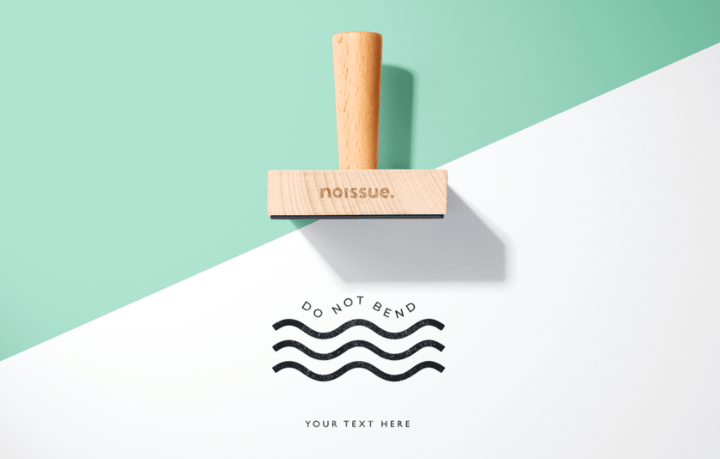
Label your box as “FRAGILE” or “HANDLE WITH CARE” using custom stickers or a custom stamp.
How to ship art prints in a mailer
If you’re sending a client a flat piece of art—such as a print, drawing, photograph, panel, or small unstretched canvas—using a mailer takes up less space and is often more affordable. Here’s how to mail artwork in a flat mailer.
Step 1: Wrap your artwork with glassine or tissue paper

Wrap your artwork with archival-quality glassine paper or acid-free custom compostable tissue paper. Secure it with acid-free painter’s tape or washi tape. Place the wrapped artwork inside a clear, sturdy plastic bag to protect it from moisture.
Step 2: Add cardboard padding
Cut two pieces of cardboard slightly larger than your artwork. Place one on each side of the bag and secure them with a few strips of washi tape.
Step 3: Pack your artwork in a mailer
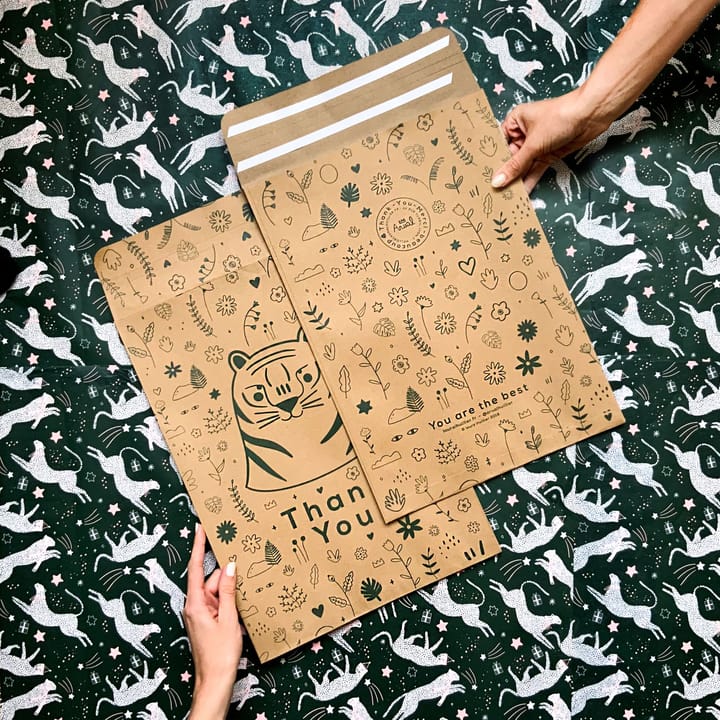
Seal your artwork in a flat kraft mailer at least 2 inches larger than the dimensions of the piece. Label the mailer with a sticker reading “FRAGILE – DO NOT BEND.”
How to ship artwork in a tube
Paper tube packaging is ideal for bigger posters and large paintings on unmounted canvases. Learn how to confidently ship artwork in a tube.
Step 1: Wrap your artwork with glassine paper
Place your artwork on two sheets of glassine paper, each two inches larger than the artwork on all sides. Paper-based artworks, like watercolor paintings, drawings, prints, and photographs, should go face-up on the glassine paper. Fabric-based art, like unmounted canvas or linen, should go face down on the paper.
Step 2: Roll the artwork into the tube
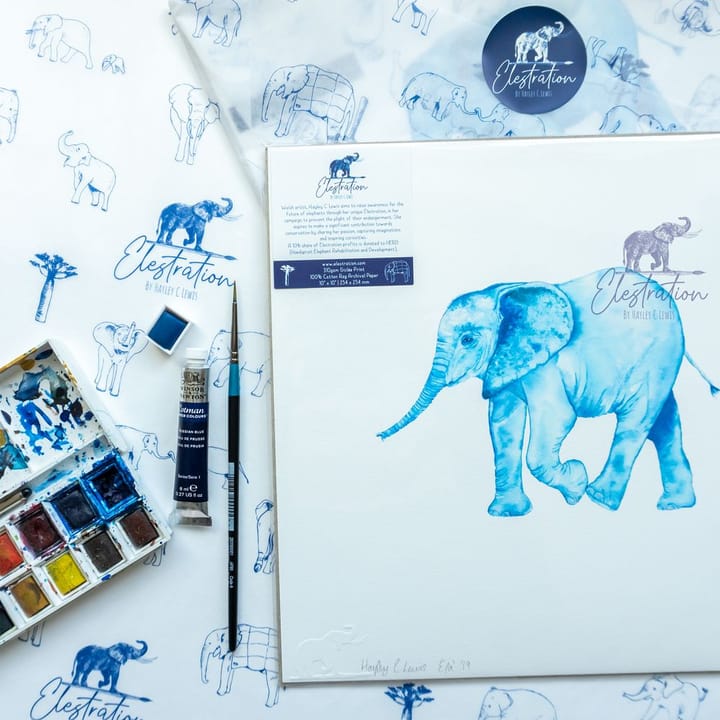
Roll the artwork around a smaller tube for inner support, securing the roll with artist’s tape. For extra padding, wrap it again with a layer of tissue paper.
Seal the wrapping with packing tape or a sticker and slide it into the shipping tube. The tube should be a few inches longer than your rolled artwork. If there’s too much space at the edges, wrap the rolled artwork in bubble wrap until it fits snugly in the tube.
Step 3: Seal the tube shut
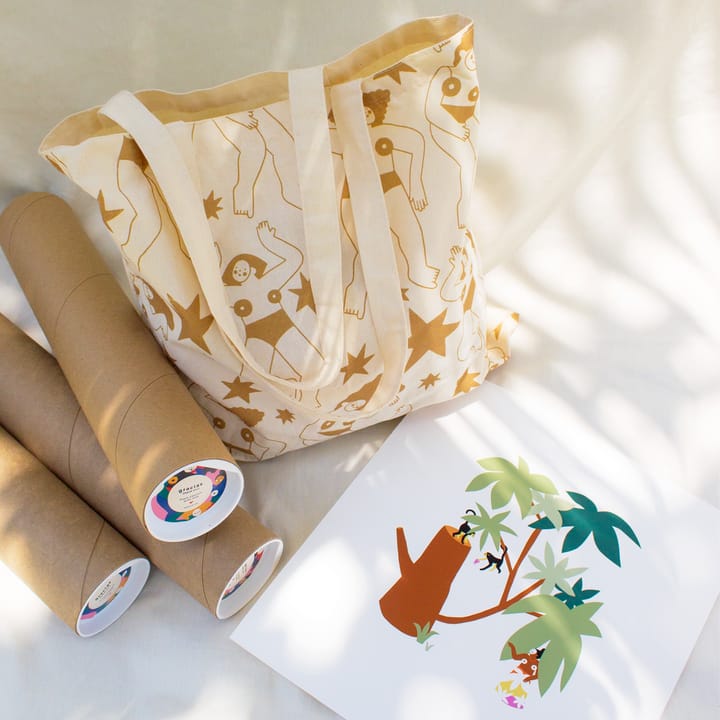
Fill the remaining space on either end with bubble wrap or bunched tissue paper, and place the lids on the tube. Seal the tube with more packing tape. Label the tube with a sticker reading “FRAGILE – DO NOT BEND.”
Adding the finishing touch

Tissue paper
Tissue paper offers a personalizable alternative to glassine paper—we love it for packaging flat paintings and prints! Choose from a classic repeating design in a single Pantone color, or a multi colored option for more customizability in tone.
Stickers
Stickers provide an easy way to add a professional touch to affordable stock packaging. You can also include die-cut stickers inside to make your art business more memorable to customers.
Thank you notes
Express your gratitude with a custom card tucked within the packaging. If you deal in prints or posters, a thank you note is a great place to add a discount code and encourage customers to return.
Factors to consider when mailing artwork

Insurance
Original artwork can be immensely valuable, and despite best efforts, damage can still occur. We highly recommend that you insure your artwork to protect against loss.
You can buy carrier’s insurance to cover your artwork when it’s in transit, or you can secure a business insurance policy that provides comprehensive coverage.
Volume
If you ship artwork in bulk, setting up recurring shipments with a consolidated freight shipper can help you cut down on costs and streamline the shipping process.
Photos and videos
Take a video or photographs from all angles; these will serve as proof of your artwork’s original condition before shipment. This comes in handy if your art is damaged en route to the recipient and you need to file an insurance claim. Plus, it makes for a great online promo op—customers love watching the packing process!
Courier costs

In the United States, UPS, FedEx, and USPS provide parcel shipping suitable for artwork. Each company also offers shipping insurance, which usually costs a percentage of the artwork’s value.
The three factors that affect the cost of shipping artwork are:
- The weight of the artwork
- The dimensions of the package
- The distance the package must travel
Artwork too large for parcel shipping must be sent via freight, which costs significantly more than standard shipping. Check each shipping company’s size restrictions; exceeding these can cost you extra.
For an accurate shipping cost estimate, speak to a courier advisor or use an online shipping calculator.
Shipping artwork through USPS
Shipping artwork through FedEx
Shipping artwork through UPS
What’s the cheapest way to ship artwork?
Shipping your artwork through USPS is often the most cost-effective option. Based on typical artwork sizes and 2025 USPS rates:
- A small print can be shipped via USPS for as little as $5–$7, depending on weight.
- A small-to-medium painting can cost roughly $10–$50, depending on service, weight, and distance.
- Larger paintings often exceed $50 because they require bigger boxes, may trigger non-standard or oversize surcharges, and weigh more.
Shipping through USPS is cost-effective, but the price jumps for large pieces. Longer distances and declaring value (purchasing insurance) will add more to the cost of shipping as well.
Wrapping it up
Shipping art has never been as easy as it is today, and with the right packing materials and packaging process, you can ship your paintings safely and efficiently.
Ready to get started with shipping artwork? If you need help with your packaging, noissue offers a wide range of sustainable and customizable products—including mailers, packing tapes, and boxes—so you can package and ship your products with ease. Get started with designing today!